



What are the limitations of an aluminum heat sink?
 Nov 19, 2026|
Aluminum heat sinks are widely used in various industries due to their excellent thermal conductivity, lightweight nature, and cost - effectiveness. As a leading supplier of aluminum heat sinks, I've had the opportunity to work with a wide range of clients and applications. However, like any technology, aluminum heat sinks have their limitations. Understanding these limitations is crucial for both designers and end - users to make informed decisions when selecting a heat dissipation solution.
1. Thermal Conductivity Limitations
Aluminum is known for its relatively high thermal conductivity, typically around 200 W/(m·K). While this is sufficient for many applications, it is not the highest among available materials. For example, copper has a thermal conductivity of approximately 400 W/(m·K), which is about twice that of aluminum.
In high - power applications where large amounts of heat need to be dissipated quickly, the thermal conductivity of aluminum can become a bottleneck. For instance, in high - end computer processors or high - power LED lighting systems with very high wattage, the rate of heat transfer from the heat source to the surrounding environment may be insufficient. This can lead to higher operating temperatures, which in turn can reduce the performance and lifespan of the electronic components.
When dealing with such high - power scenarios, designers may need to consider using copper heat sinks or hybrid heat sinks that incorporate both copper and aluminum. These options can provide better heat transfer performance but often come at a higher cost and increased weight.
2. Oxidation and Corrosion
Aluminum has a natural tendency to oxidize when exposed to air. While the thin oxide layer that forms on the surface of aluminum can actually provide some protection against further corrosion in certain environments, it also has some drawbacks. The oxide layer is a poor conductor of heat compared to the underlying aluminum. As the oxide layer thickens over time, it can act as an insulator, reducing the overall thermal performance of the heat sink.
In addition, in harsh environments such as those with high humidity, high salinity, or exposure to certain chemicals, aluminum heat sinks are more prone to corrosion. Corrosion can not only damage the physical structure of the heat sink but also significantly degrade its thermal performance. For example, in marine applications or industrial settings where chemicals are present, the corrosion of aluminum heat sinks can lead to pitting, flaking, and a reduction in the surface area available for heat transfer.
To mitigate these issues, surface treatments such as anodizing can be applied to aluminum heat sinks. Anodizing creates a thicker and more durable oxide layer that is more resistant to corrosion. However, anodizing also has its limitations. It can increase the cost of the heat sink, and in some cases, the anodized layer may still have a slight negative impact on thermal conductivity.
3. Mechanical Strength and Design Constraints
Although aluminum is lightweight, it has relatively lower mechanical strength compared to some other metals. This can pose challenges in applications where the heat sink needs to withstand mechanical stress or vibration. For example, in automotive applications or aerospace systems, the heat sink may be subjected to vibrations during operation, and if the aluminum heat sink does not have sufficient mechanical strength, it can crack or break.
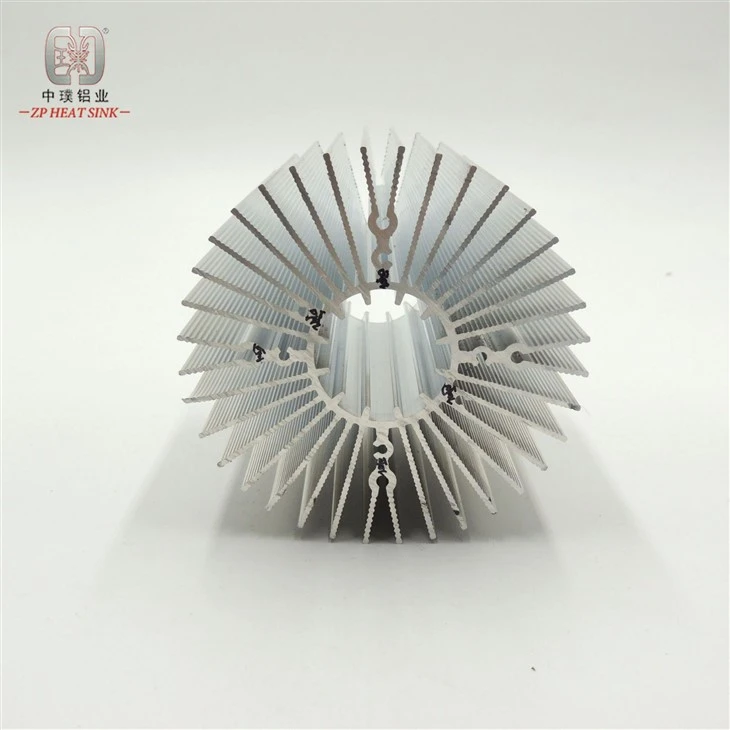

In terms of design, the manufacturing processes for aluminum heat sinks, such as extrusion and machining, also impose certain limitations. Extruded aluminum heat sinks are limited in terms of the complexity of the cross - sectional shapes that can be produced. While extrusion is a cost - effective method for producing heat sinks with simple and regular shapes, it becomes more difficult and expensive to create complex geometries. For example, creating heat sinks with internal channels or intricate fin structures may require more advanced manufacturing techniques, which can increase the cost and production time.
4. Size and Weight Limitations in High - Density Applications
In modern electronic devices, there is a trend towards miniaturization and high - density packaging of components. While aluminum is lightweight, in high - power and high - density applications, the size of the aluminum heat sink required to dissipate the heat can still be a challenge. As the power density of electronic components increases, a larger surface area is needed for heat dissipation. This often means larger and heavier heat sinks, which may not be suitable for applications where space and weight are critical factors.
For example, in portable electronic devices such as laptops or smartphones, the available space for a heat sink is extremely limited. Using a large aluminum heat sink to dissipate the heat generated by high - performance processors may not be feasible due to the device's form factor and the need to keep the weight down. In such cases, alternative heat dissipation solutions such as heat pipes or vapor chambers may be required.
5. Cost - Performance Balance in Low - Volume Production
Aluminum heat sinks are generally considered cost - effective, especially for high - volume production. However, in low - volume production or custom - designed applications, the cost - performance balance can be less favorable. The initial tooling costs for manufacturing aluminum heat sinks, such as the cost of creating extrusion dies or machining fixtures, can be relatively high.
For small - scale production runs, these upfront costs can significantly increase the per - unit cost of the heat sink. In addition, custom - designed heat sinks may require more complex manufacturing processes and additional quality control measures, which can further drive up the cost. As a result, for low - volume or custom applications, other materials or manufacturing methods may need to be considered.
6. Our Solutions and Product Offerings
Despite these limitations, we, as an aluminum heat sink supplier, have developed a range of products and solutions to address these challenges. We offer a variety of aluminum heat sinks, including the Large Aluminum Fold Fin Heat Sink Plate, which provides a large surface area for efficient heat dissipation. Our Custom Aluminum Extrusion Heatsinks For Automotive Refrigerators are designed to meet the specific requirements of automotive applications, with enhanced mechanical strength and corrosion resistance.
We also have Interlocking Fin Heat Sinks, which offer a cost - effective and customizable cooling solution. Our Heat Sink Design services allow us to work closely with clients to develop heat sinks that are optimized for their specific applications, taking into account factors such as thermal performance, mechanical strength, and cost. And our Precision Round Aluminum Heat Sinks are suitable for applications where a compact and precise heat dissipation solution is required.
Contact Us for Procurement
If you are facing challenges in heat dissipation and are considering aluminum heat sinks for your application, we invite you to contact us for procurement and further discussions. Our team of experts is ready to assist you in selecting the most suitable heat sink solution based on your specific requirements. We can also provide detailed technical support and cost - effective solutions to meet your needs.
References
- Incropera, F. P., & DeWitt, D. P. (2002). Fundamentals of Heat and Mass Transfer. John Wiley & Sons.
- Holman, J. P. (2002). Heat Transfer. McGraw - Hill.