



What is the heat dissipation mechanism of die cast heat sinks?
 Oct 12, 2026|
 As a supplier of die cast heat sinks, I've witnessed firsthand the vital role these components play in various industries. Die cast heat sinks are widely used in electronic devices, automotive applications, and many other fields to maintain optimal operating temperatures. In this blog, I'll delve into the heat dissipation mechanism of die cast heat sinks, exploring the science behind their functionality and the factors that influence their performance.

Understanding Heat Transfer Basics
Before we dive into the specific heat dissipation mechanism of die cast heat sinks, it's essential to understand the fundamental principles of heat transfer. There are three main modes of heat transfer: conduction, convection, and radiation.
- Conduction: This is the transfer of heat through a solid material. When two objects at different temperatures are in contact, heat flows from the hotter object to the cooler one. The rate of conduction depends on the thermal conductivity of the material, the temperature difference between the two objects, and the cross-sectional area of the contact.
- Convection: Convection involves the transfer of heat through the movement of fluids (liquids or gases). When a fluid is heated, it becomes less dense and rises, while the cooler fluid sinks. This creates a circulation pattern that transfers heat from one location to another. Convection can be either natural (due to density differences) or forced (using a fan or pump).
- Radiation: Radiation is the transfer of heat through electromagnetic waves. All objects emit thermal radiation, and the amount of radiation emitted depends on the object's temperature and surface properties. Unlike conduction and convection, radiation does not require a medium to transfer heat and can occur in a vacuum.
Heat Dissipation Mechanism of Die Cast Heat Sinks
Die cast heat sinks are designed to efficiently transfer heat away from a heat source, such as an electronic component, to the surrounding environment. The heat dissipation process typically involves the following steps:
- Heat Conduction: The heat generated by the heat source is first conducted through the base of the heat sink. Die cast heat sinks are usually made of materials with high thermal conductivity, such as aluminum or copper, which allows for efficient heat transfer. The base of the heat sink is in direct contact with the heat source, ensuring good thermal coupling.
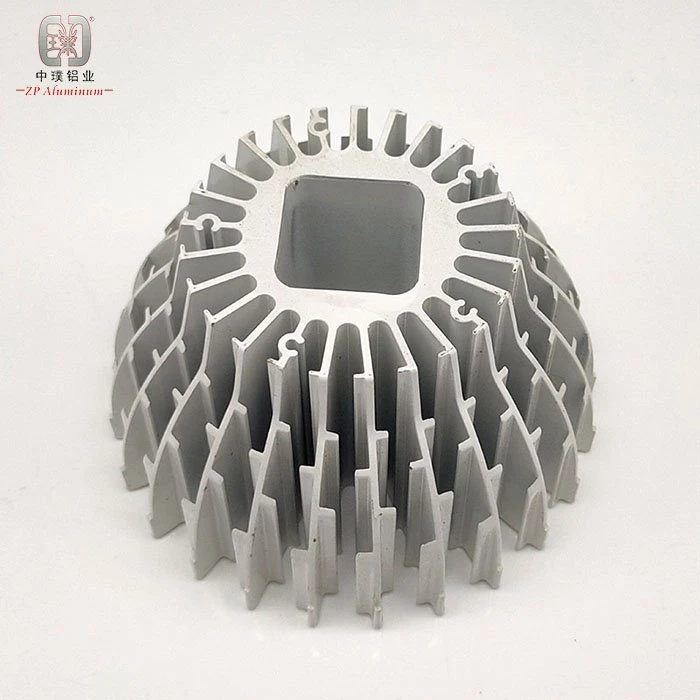
- Heat Spreading: Once the heat reaches the base of the heat sink, it spreads out across the surface of the fins. The fins increase the surface area of the heat sink, which enhances the heat transfer rate. The design of the fins, including their shape, size, and spacing, plays a crucial role in determining the heat dissipation efficiency.
- Convection and Radiation: The heat is then transferred from the fins to the surrounding air through convection and radiation. Natural convection occurs when the heated air near the fins rises, creating a flow of air that carries the heat away. Forced convection can be achieved by using a fan to increase the air flow over the fins, which significantly improves the heat dissipation rate. Radiation also contributes to the heat transfer process, although its contribution is relatively small compared to convection.
Factors Affecting Heat Dissipation Performance
Several factors can influence the heat dissipation performance of die cast heat sinks. Understanding these factors is essential for designing and selecting the right heat sink for a specific application.
- Material Properties: The thermal conductivity of the material used to make the heat sink is a critical factor. Aluminum is a popular choice for die cast heat sinks due to its high thermal conductivity, low cost, and good corrosion resistance. Copper has even higher thermal conductivity but is more expensive.
- Fin Design: The design of the fins, including their shape, size, and spacing, affects the surface area available for heat transfer and the air flow around the fins. Fins with a larger surface area and a more efficient shape can enhance the heat dissipation rate.
- Air Flow: The air flow over the heat sink is crucial for efficient heat transfer. Forced convection using a fan can significantly improve the heat dissipation performance by increasing the air flow rate. The orientation of the heat sink and the placement of the fan also play a role in optimizing the air flow.
- Surface Finish: The surface finish of the heat sink can affect the heat transfer rate. A smooth surface finish can reduce the resistance to air flow and improve the convection heat transfer. Additionally, a black or dark-colored surface can enhance the radiation heat transfer.
Applications of Die Cast Heat Sinks
Die cast heat sinks are used in a wide range of applications, including:
- Electronics: In electronic devices such as computers, servers, and LED lighting, die cast heat sinks are used to dissipate the heat generated by the electronic components. This helps to prevent overheating and ensures the reliable operation of the devices.
- Automotive: In automotive applications, die cast heat sinks are used in engine control units, power electronics, and other components to maintain optimal operating temperatures. This is crucial for the performance and longevity of the automotive systems.
- Industrial Equipment: Die cast heat sinks are also used in industrial equipment such as power supplies, motor drives, and control panels. They help to dissipate the heat generated by the electrical components and ensure the efficient operation of the equipment.
Our Die Cast Heat Sink Products
As a leading supplier of die cast heat sinks, we offer a wide range of products to meet the diverse needs of our customers. Our products include LED Die Casting Heat Sink, OEM Custom Die Cast Heatsink Aluminum, and Aluminum Die Casting Heat Sink.
Our die cast heat sinks are designed and manufactured using the latest technology and high-quality materials to ensure excellent heat dissipation performance. We also offer custom design and manufacturing services to meet the specific requirements of our customers. Whether you need a standard heat sink or a custom solution, we have the expertise and capabilities to provide you with the best products and services.
Contact Us for Procurement
If you're looking for high-quality die cast heat sinks for your application, we'd love to hear from you. Our team of experts can help you select the right heat sink for your needs and provide you with a competitive quote. Contact us today to start the procurement process and take the first step towards improving the thermal management of your products.
References
- Incropera, F. P., & DeWitt, D. P. (2002). Fundamentals of Heat and Mass Transfer. John Wiley & Sons.
- Kreith, F., & Bohn, M. S. (2010). Principles of Heat Transfer. Cengage Learning.
- Holman, J. P. (2010). Heat Transfer. McGraw-Hill.