




Are pin fin heat sinks suitable for high - power applications?
 Nov 21, 2026|
Are Pin Fin Heat Sinks Suitable for High - Power Applications?
In the ever - advancing world of electronics, high - power applications are becoming increasingly prevalent. From high - performance computing systems to advanced LED lighting and power electronics, the need to dissipate large amounts of heat efficiently is crucial. Pin fin heat sinks have emerged as a popular choice for thermal management in these applications, but the question remains: are they suitable for high - power scenarios?
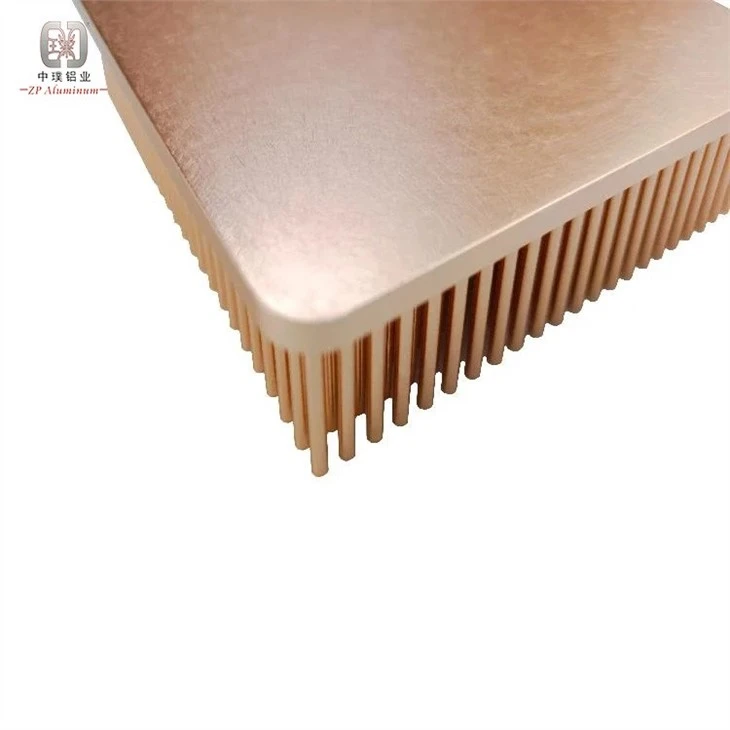

As a supplier of pin fin heat sinks, we have witnessed firsthand the diverse applications of our products. Pin fin heat sinks are characterized by an array of pins protruding from a base plate. These pins significantly increase the surface area available for heat transfer, which is a fundamental principle in thermal management. The larger the surface area in contact with the cooling medium (usually air), the more heat can be dissipated.
One of the key advantages of pin fin heat sinks in high - power applications is their excellent heat dissipation capabilities. The unique pin structure allows for enhanced convective heat transfer. When air flows over the pins, it creates a turbulent flow pattern, which improves the heat transfer coefficient. This means that more heat can be transferred from the heat sink to the surrounding air in a shorter period. For example, in high - power LED lighting systems, where excessive heat can reduce the lifespan and efficiency of the LEDs, pin fin heat sinks can effectively maintain the temperature within an acceptable range. Our Pin Fin Aluminum LED Heat Sink is specifically designed to meet these requirements, providing reliable thermal management for high - power LEDs.
Another factor that makes pin fin heat sinks suitable for high - power applications is their flexibility. They can be manufactured from different materials, such as aluminum and copper, each with its own thermal properties. Aluminum is a popular choice due to its relatively low cost and good thermal conductivity. It is lightweight and easy to machine, making it suitable for a wide range of applications. On the other hand, copper has a higher thermal conductivity than aluminum, which means it can transfer heat more efficiently. Our Copper Forged Pin Fin Heat Sink and Forged Copper Pin Fin Heat Sink are made from high - quality copper, offering superior thermal performance for the most demanding high - power applications.
In addition to material selection, the design of pin fin heat sinks can also be customized to optimize their performance in high - power applications. The shape, size, and spacing of the pins can be tailored to the specific requirements of the application. For instance, in applications where space is limited, a more compact pin fin design with smaller pins can be used. Conversely, in applications where there is ample space and a higher heat dissipation rate is required, larger pins with a greater surface area can be employed.
However, it is important to note that pin fin heat sinks also have some limitations in high - power applications. One of the main challenges is the pressure drop associated with air flow through the pin array. As air passes through the narrow spaces between the pins, it experiences resistance, which can lead to a decrease in air flow rate. This can reduce the overall heat transfer efficiency, especially in applications where a high - velocity air flow is required. To overcome this issue, careful design and optimization of the pin fin geometry are necessary. Additionally, in some cases, the use of a fan or other forced - air cooling methods may be required to ensure adequate air flow.
Another limitation is the cost. High - performance pin fin heat sinks, especially those made from copper, can be relatively expensive. This can be a significant factor in cost - sensitive applications. However, when considering the long - term benefits of reliable thermal management, such as increased component lifespan and improved performance, the cost of a high - quality pin fin heat sink may be justified.
In high - power computing applications, such as data centers and server farms, pin fin heat sinks can play a crucial role. These environments generate a large amount of heat, and efficient thermal management is essential to prevent overheating and ensure the reliable operation of the equipment. Pin fin heat sinks can be used to cool processors, graphics cards, and other high - power components. Their ability to dissipate heat effectively can help reduce energy consumption and improve the overall efficiency of the computing system.
In power electronics applications, such as inverters and converters, pin fin heat sinks are also widely used. These devices generate a significant amount of heat during operation, and improper thermal management can lead to component failure. Pin fin heat sinks can provide the necessary cooling to maintain the temperature of the power electronics within a safe range, ensuring the reliable and efficient operation of the system.
To conclude, pin fin heat sinks are generally suitable for high - power applications. Their excellent heat dissipation capabilities, flexibility in design and material selection make them a viable option for a wide range of high - power scenarios. However, it is important to carefully consider the specific requirements of the application, such as air flow conditions, space limitations, and cost, when selecting a pin fin heat sink.
If you are looking for high - quality pin fin heat sinks for your high - power applications, we invite you to contact us for a detailed discussion. Our experienced team can provide you with customized solutions based on your specific needs and requirements. Let us work together to ensure the reliable thermal management of your high - power electronics.
References
- Incropera, F. P., & DeWitt, D. P. (2002). Fundamentals of Heat and Mass Transfer. John Wiley & Sons.
- Kays, W. M., & Crawford, M. E. (1993). Convective Heat and Mass Transfer. McGraw - Hill.
- Daryabeigi, K. (2008). Thermal Design and Optimization of High - Performance Heat Sinks. ASME Press.