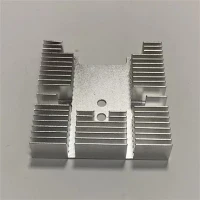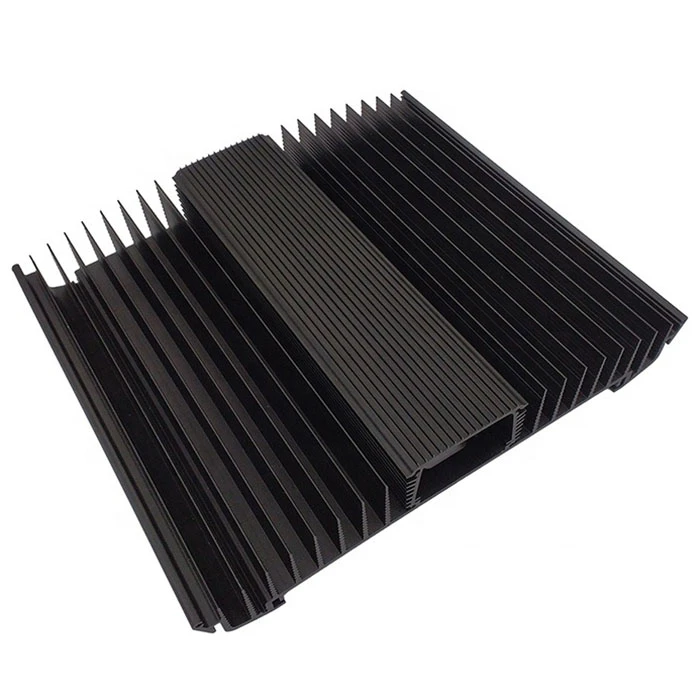

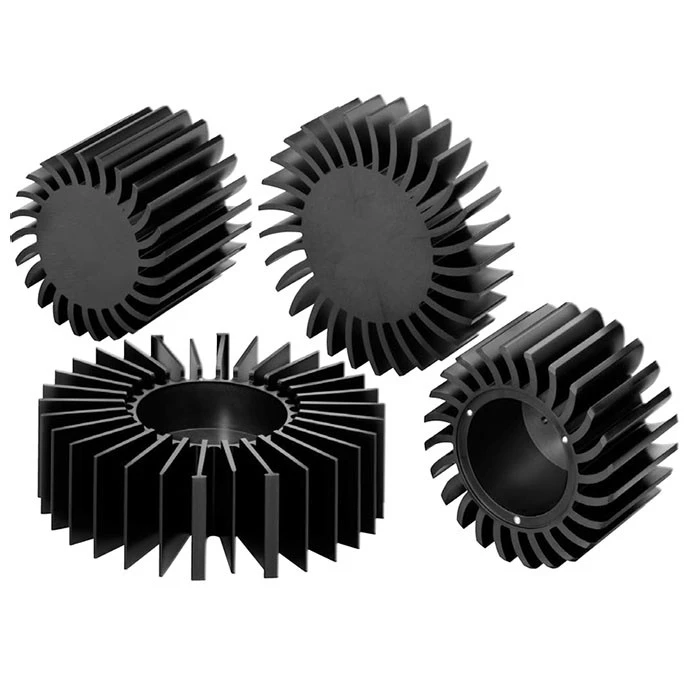
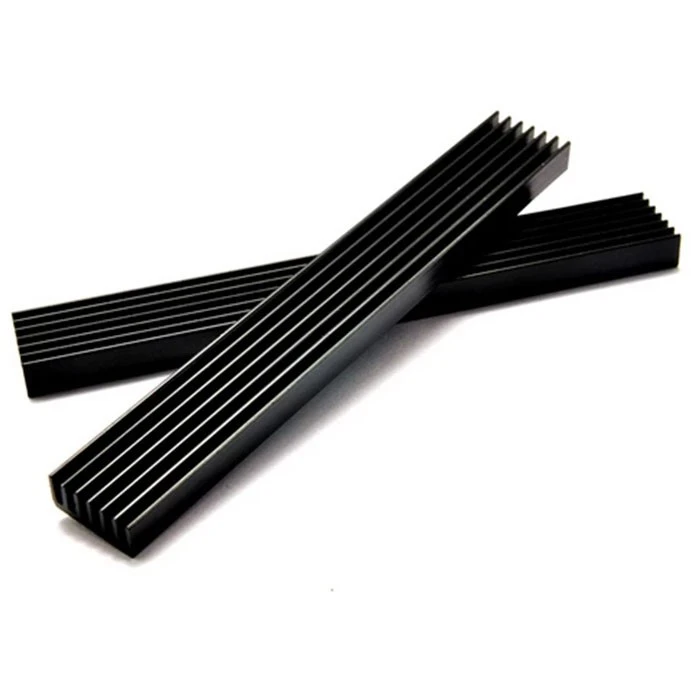
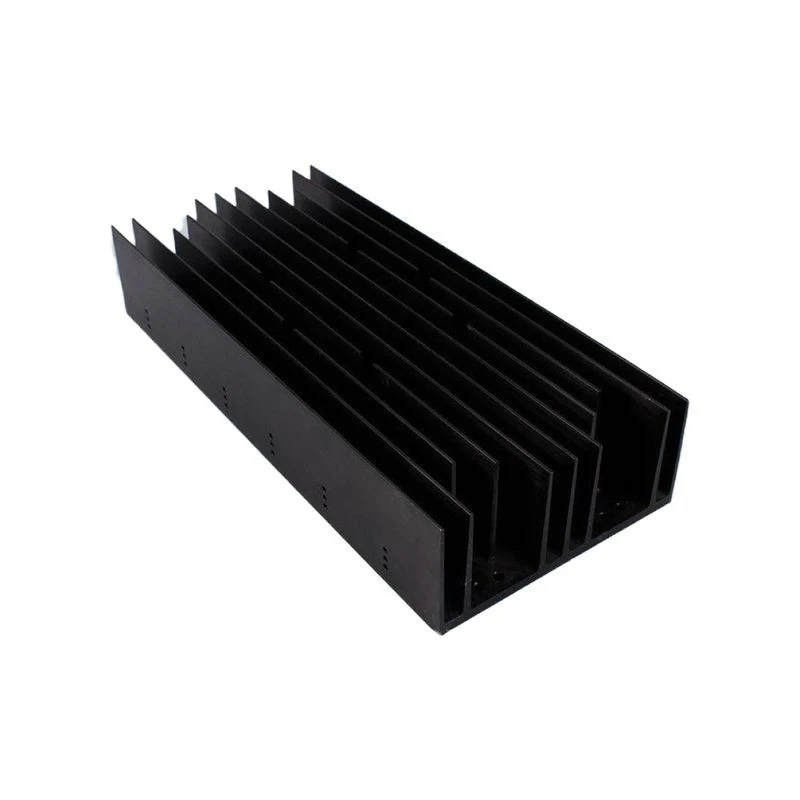
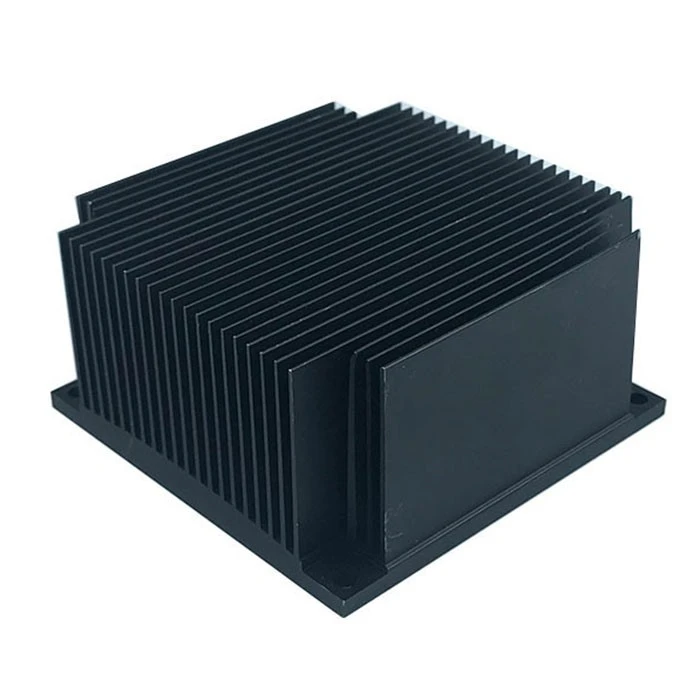
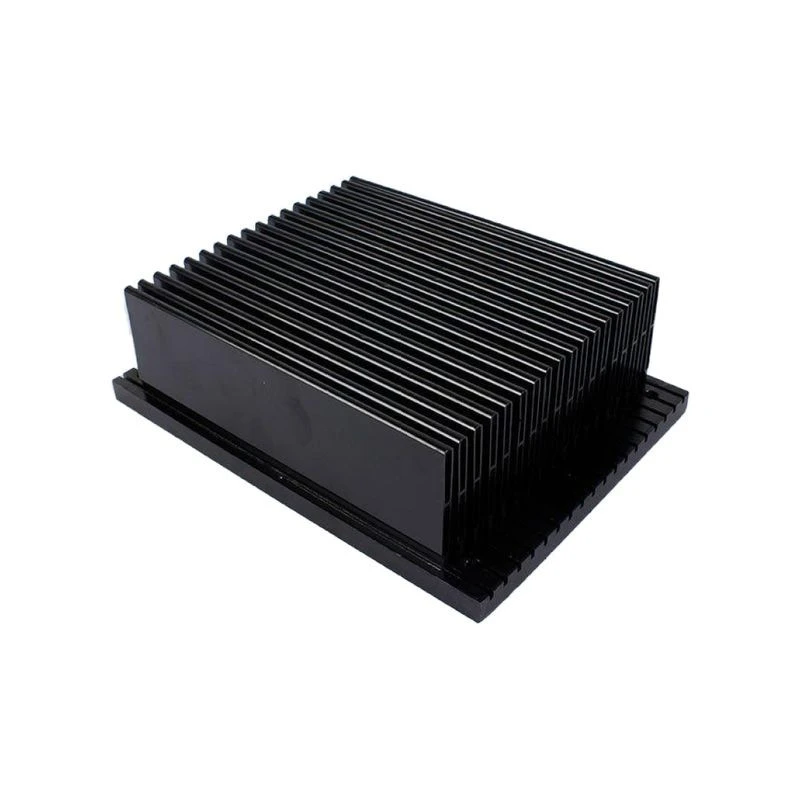
Black Anodized Aluminum Heatsink
Matte black anodized aluminum heatsink for LED fixtures, audio equipment and outdoor electronics — corrosion resistance plus the finish your housing design calls for. Extruded, skived and CNC machined options from a Foshan factory with 20 years of export experience.

- Product Introduction
A black anodized aluminum heatsink is an aluminum heat sink whose surface has been dyed black during the anodizing process. The anodizing step grows a hard aluminum oxide layer on the metal, and the black dye is sealed inside that layer before the final seal. The result is a uniform matte black surface that will not peel, chip or fade the way paint or powder coating can, and that keeps its appearance after years of outdoor or high-temperature service.
Black anodizing serves three purposes on a heat sink. First, corrosion protection - the oxide layer resists oxidation, humidity and salt air far better than bare aluminum. Second, appearance matching - black is the standard finish inside LED fixtures, audio equipment, automotive electronics and industrial cabinets, where a bare silver part would look unfinished. Third, a modest thermal benefit: a black surface has higher emissivity than bare aluminum, which improves radiant heat transfer. In natural convection that gain is real but small - usually a few percent, not a different league of cooling. We state it that way because specifying a heat sink is about fin geometry first and finish second.
We black-anodize aluminum heatsinks in extruded, skived fin, die cast and CNC machined forms, with coating thickness controlled between 8 and 15 μm. For 20 years we have supplied black anodized heatsinks to lighting, audio, telecom and industrial customers in Europe and North America, and we can match a specific black tone to your housing if you send a sample or a color reference.
Why Choose ZP HEAT SINK?
- 20 Years Aluminum Thermal Experience: Foshan OEM/ODM factory since 2006, supplying black anodized heatsinks to EU and US brands.
- Controlled Anodizing Thickness: Coating held at 8-15 μm - thick enough to protect, thin enough that it does not measurably block heat transfer.
- Color Matching Available: Send a sample or a color reference and we will match the black tone and gloss level to your housing.
- Four Process Routes: Extruded, skived fin, die cast and CNC machined parts all go through the same in-house finishing flow.
Product Specification
| Item | Specification |
| Material | Aluminum alloy 6063-T5 / 6061-T6; ADC12 for die cast parts |
| Base Process | Extrusion, skived fin, die casting, or CNC machining from solid block |
| Anodizing Type | Type II sulfuric anodizing, black dyed and sealed |
| Coating Thickness | 8 μm – 15 μm (Type III hard coat 25-50 μm on request) |
| Color Options | Matte black (standard); satin or semi-gloss black on request |
| Color Matching | Tone matched to customer sample or Pantone / RAL reference |
| Emissivity | Approx. 0.85-0.90 (black anodized surface) |
| Salt Spray Resistance | 48-96 hours depending on coating thickness |
| Profile Width / Base Size | 10 mm – 300 mm (extruded); up to 300 × 300 mm (machined or cast) |
| Max Length | 6,500 mm (extruded profile, cut to order) |
| Mounting Face Flatness | ≤ 0.1 mm; ≤ 0.05 mm on machined contact faces |
| Typical Applications | LED fixtures, audio amplifiers, automotive electronics, telecom, industrial cabinets |
Product Gallery

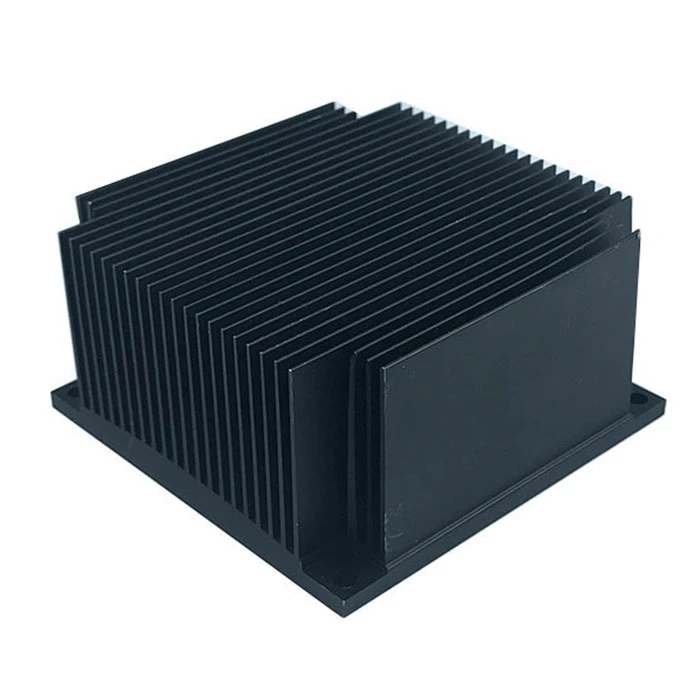
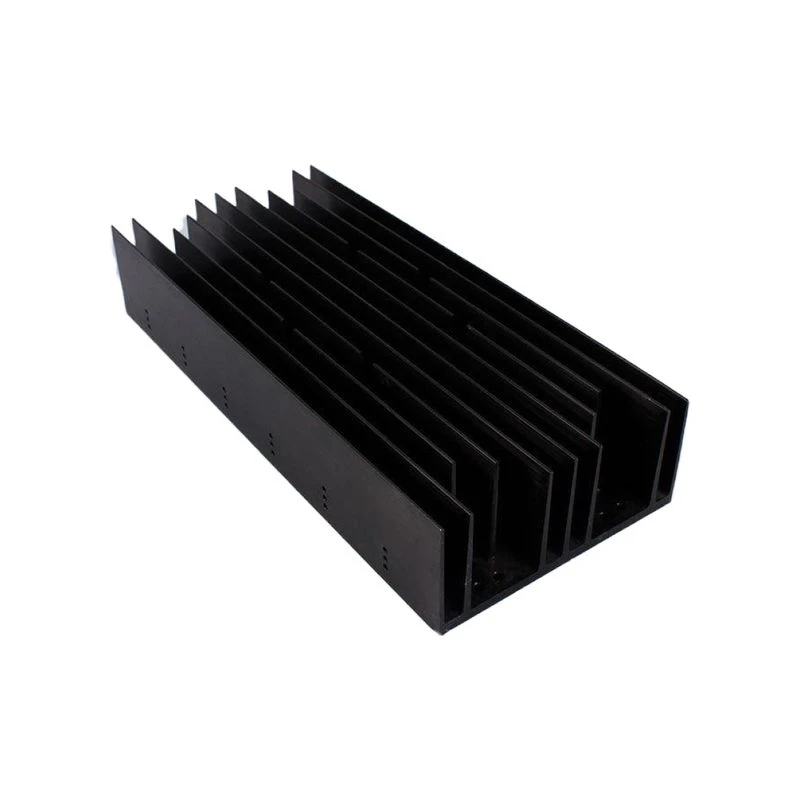
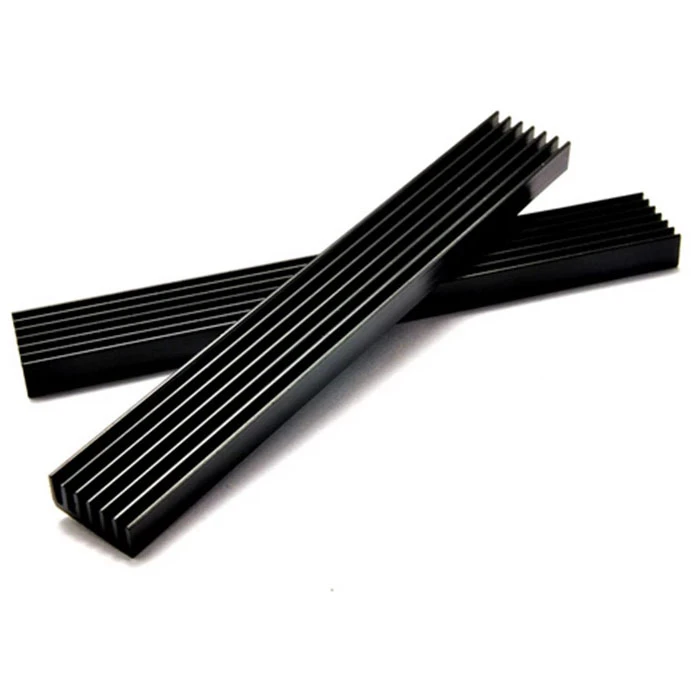

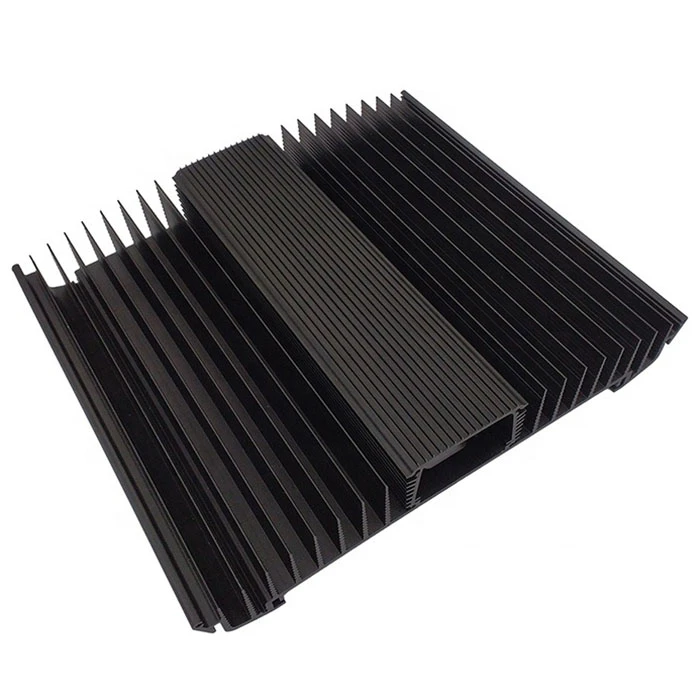
Product Application
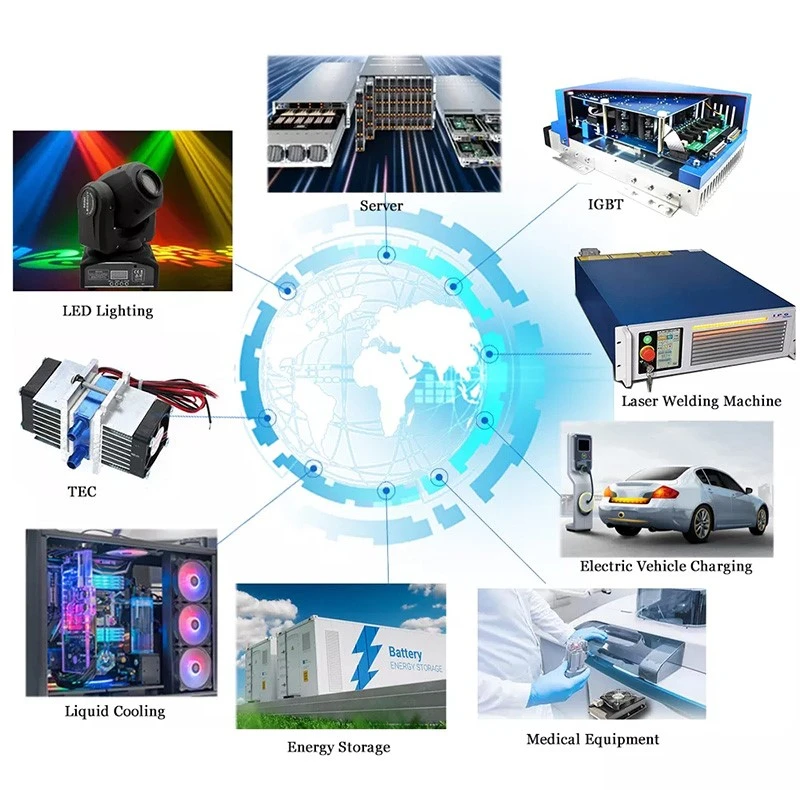
- LED lighting fixtures: The default finish for street lights, high-bay fixtures and spotlights with black housings. A silver heat sink showing through a black fixture reads as unfinished, so black anodizing is specified for appearance as much as for corrosion resistance.
- Audio and power amplifiers: Hi-Fi, professional audio and guitar amplifiers. Black anodized extrusion is the classic heat sink finish in this category, and the oxide layer holds up to the heat cycling inside an amplifier chassis.
- Automotive and EV electronics: LED headlamp drivers, DC-DC converters and on-board chargers. Black finish matches under-hood and interior trim, and the coating resists the humidity and salt exposure of road service.
- Outdoor and telecom equipment: Remote radio units, power supplies and outdoor cabinets. Black anodizing protects against weathering, and the dark surface reduces solar heat gain compared with a bright silver part.
- Industrial control cabinets: Servo drives, inverters and power supplies mounted inside black or dark grey enclosures, where finish consistency across the panel matters to the end customer.
- Consumer electronics and instruments: Set-top boxes, projectors, lab instruments and medical devices with a black industrial design language.
Customization Options
- Finish specification: Type II black anodizing (standard), hard coat Type III for wear resistance, or satin / semi-gloss black where the design calls for a different sheen.
- Color matching: Send a physical sample, a Pantone or RAL reference, or a photo under controlled light and we will match the black tone and gloss level.
- Process route: Extruded profile, skived fin, die cast, or CNC machined from solid - the finish is identical across all four.
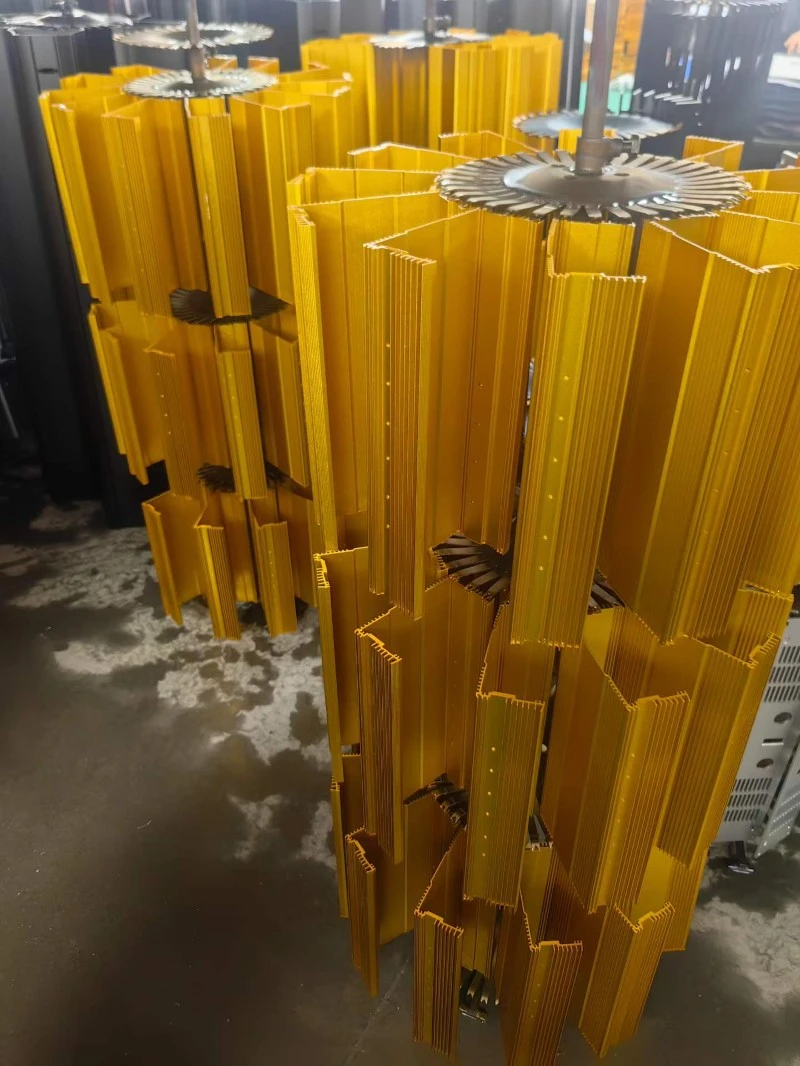
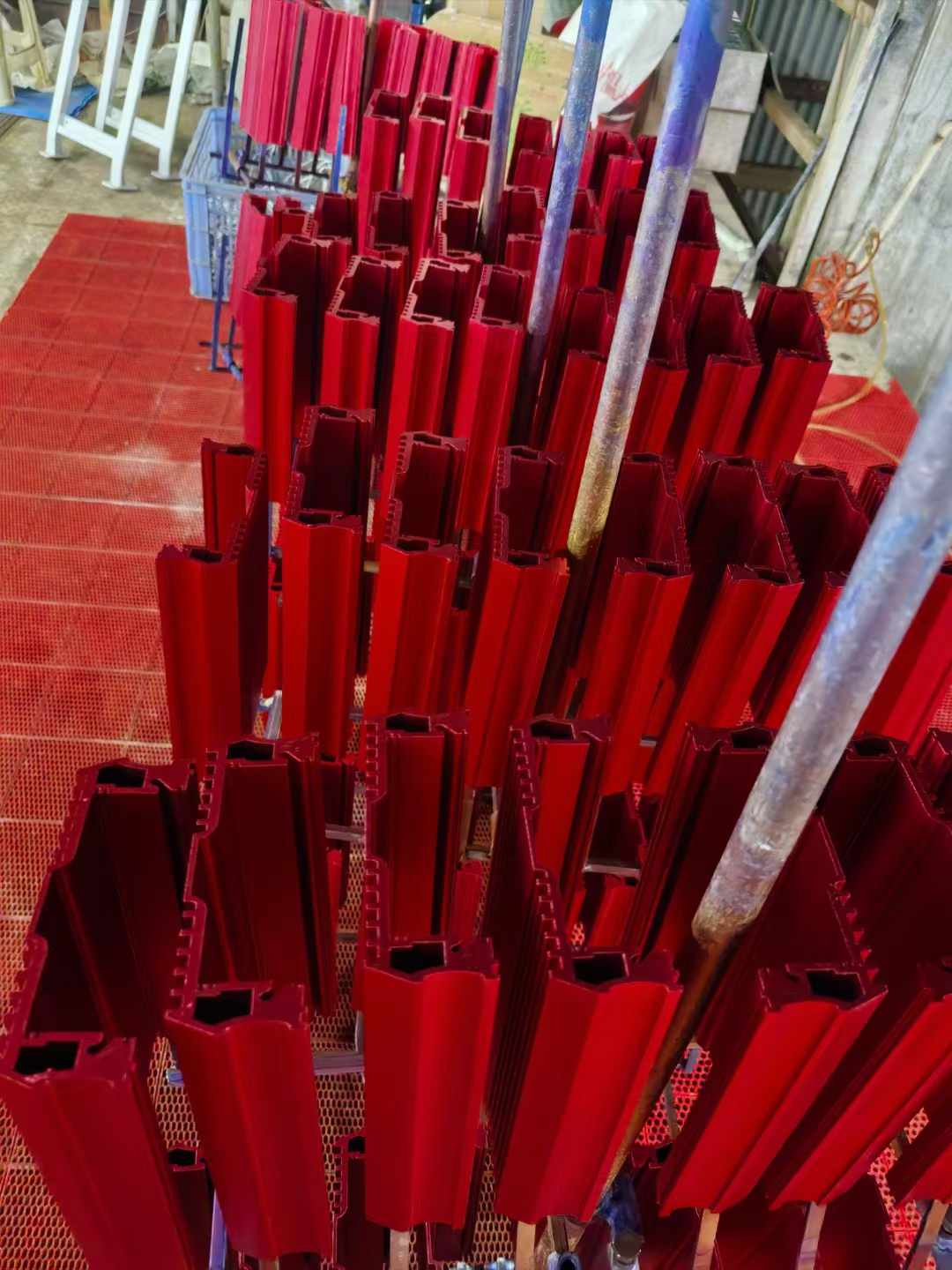
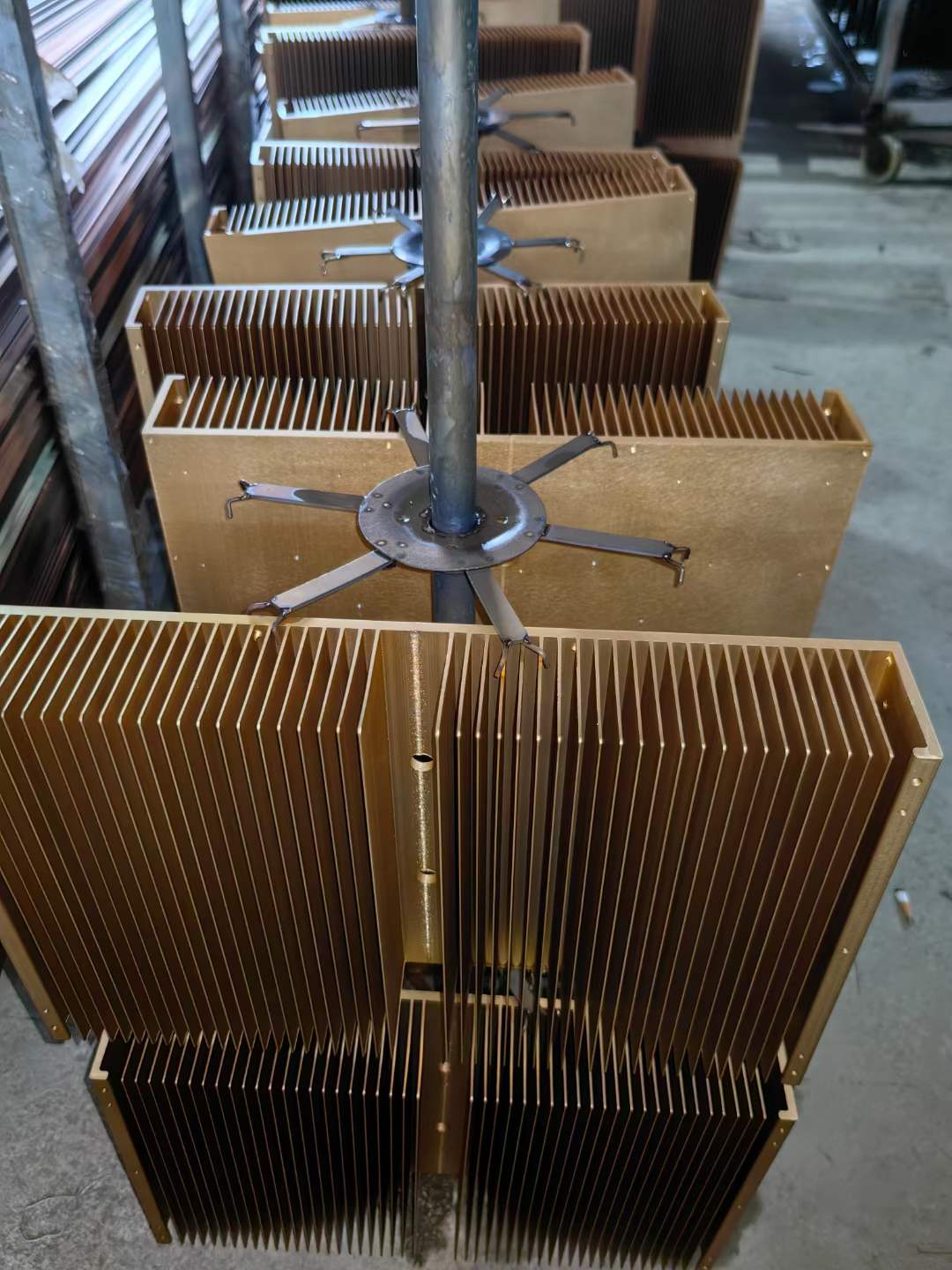
- Machining before finishing: Threaded holes, slots, pockets and chamfers machined before anodizing, so no bare metal is exposed after the finish is applied.
- Masking options: Selected areas left un-anodized for electrical grounding or soldering, if your assembly requires a conductive contact point.
- Logo and marking: Laser engraving after anodizing (contrasts against the black) or silk-screen printing.
- Protective packaging: Anti-scratch film, foam wrap and tray packing - anodized surfaces mark easily in transit and the packing spec protects the finish, not just the part.
Quality Control
- Drawing review before machining, including which surfaces are visible and must not be marked.
- Material certificate for 6063-T5 / 6061-T6 aluminum on every batch.
- Coating thickness measurement (8-15 μm) with an eddy-current gauge, sampled per lot.
- Color and gloss consistency check against the approved sample under standard light.
- Dimensional inspection after machining and after finishing - anodizing adds a small growth, and threaded holes are checked after coating.
- Salt spray test on request (48-96 h) for outdoor and automotive applications.
- Final visual inspection under controlled light, then foam-wrapped packing.
FAQ
Q: Does black anodizing really improve heat sink performance?
A: It helps, but modestly. A black anodized surface has an emissivity around 0.85-0.90 versus roughly 0.05-0.20 for bare aluminum, so it radiates more heat. In natural convection that can add a few percent to the total heat rejection; in forced convection with a fan, radiation is a small share of the total and the gain is even smaller. The honest position: choose black anodizing for corrosion resistance and appearance, and treat the radiant gain as a bonus rather than the reason for the specification. Fin geometry still determines most of the performance.
Q: What is the difference between black anodizing and black powder coating?
A: Anodizing is not a coating sitting on the surface - it converts the aluminum itself into an oxide layer, with the dye sealed inside it. That layer cannot peel or flake, and it retains metal-like thermal behaviour. Powder coating is a polymer layer applied on top, typically 50-100 μm thick, which adds thermal resistance to the heat path and can chip at edges. For heat sinks, anodizing is the correct finish; powder coating is used on housings rather than on the thermal path.
Q: How thick is the anodized layer and does it block heat transfer?
A: Standard Type II black anodizing is 8-15 μm. The aluminum oxide layer has lower conductivity than the base metal, but at that thickness its thermal resistance is negligible compared with the interface pad and the convection path - a few thousandths of a degree per watt. Type III hard coat at 25-50 μm is thicker and is chosen for wear resistance, not for thermal reasons.
Q: Can I get the heat sink anodized in a black that matches my housing?
A: Yes. Black anodizing is a dye process, so tone and gloss vary between batches unless controlled. Send us a physical sample or a Pantone / RAL reference and we will run a matching trial on a scrap part before production, then keep the approved sample on file for every repeat order.
Q: What is the minimum order quantity and lead time?
A: MOQ is 100 pcs when an existing profile fits your design and about 500 pcs when a new die is needed. Samples are ready in 7-15 working days; mass production takes 20-30 working days after the sample is approved. Anodizing is done in-house, so it does not add a separate outsourcing delay to the schedule.
Related Products
- Anodized Aluminum Profile Heatsink
- Clear Anodized Aluminum Heat Sink
- High Power LED Heat Sink
- CNC Machined Aluminum Heat Sink
Need black anodized aluminum heatsinks that match your housing and ship on schedule?
Send us your drawing and the color reference you need to match. Our team will confirm the process route, the coating specification and the inspection criteria, then return a detailed quote within 24 hours.
Hot Tags: black anodized aluminum heatsink, China, suppliers, manufacturers, factory, customized, wholesale, buy, price, free sample, aluminium bitcoin mining heat sink, Aluminum Heat Sink for Ufasoft Coin, Aluminum Heat Sinks, engine heat sink, half round heat sink, led light heat sink